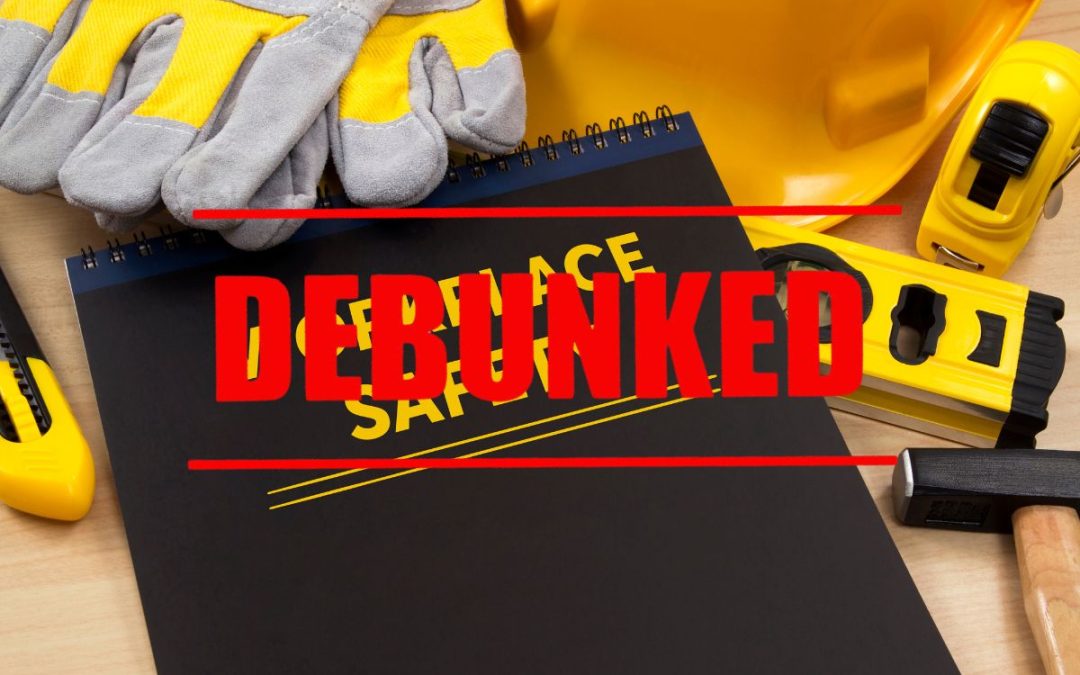
Workplace safety isn't just about hard hats and fire drills. It's a complex web of regulations, protocols, and common-sense practices that keep employees healthy and businesses thriving. But amidst this web, unfortunately, lurks a tangled mess of misconceptions and misinformation. These "safety myths" can not only create a false sense of security but also actively impede efforts to create a truly safe work environment. So, let's untangle these myths and set the record straight!
Mito #1: Los accidentes simplemente ocurren.
The Truth: This fatalistic attitude throws away responsibility and ignores the reality that most accidents are preventable. Every incident has a root cause, whether it's faulty equipment, inadequate training, or environmental hazards. Focusing on identifying and addressing these root causes, rather than shrugging at them as inevitable mishaps, is the key to preventing future accidents.
Mito #2: El EPP es el escudo definitivo.
The Truth: Personal protective equipment (PPE) plays a crucial role, but it shouldn't be the first line of defense. Think of it as a last resort. The hierarchy of controls prioritizes eliminating hazards altogether, substituting them with less dangerous alternatives, and implementing engineering controls to minimize exposure. Only after that should PPE come into play as an additional protective layer.
Myth #3: Experienced Workers Don't Need Training.
The Truth: Experience is valuable, but it's not a substitute for formal training. Safety regulations and best practices constantly evolve, and even seasoned veterans need to stay updated. Regular training ensures everyone, regardless of experience level, is familiar with current procedures, potential hazards, and emergency protocols.
Mito #4: Informar sobre peligros es delatar.
La Verdad: Esta mentalidad crea una cultura de miedo y silencio, lo que dificulta la detección temprana y la prevención de accidentes. Informar sobre peligros, por triviales que parezcan, no es una denuncia sino un acto de responsabilidad. Permite a la administración abordar problemas potenciales antes de que se conviertan en incidentes graves.
Mito #5: La seguridad es cara e inconveniente.
La verdad: si bien priorizar la seguridad puede requerir inversiones iniciales en equipos, capacitación y protocolos de seguridad, el costo palidece en comparación con el costo financiero y humano de los accidentes. La pérdida de productividad, los honorarios legales y los gastos médicos debido a lesiones pueden paralizar una empresa. Invertir en seguridad es verdaderamente una inversión en el bienestar a largo plazo de sus empleados y sus resultados finales.
Mito #6: La seguridad es sólo para trabajos peligrosos.
The Truth: Every workplace, regardless of industry, carries potential hazards. From repetitive strain injuries in offices to slips and falls in retail environments, ignoring safety protocols in seemingly "safe" workplaces can lead to serious consequences. A comprehensive safety culture must permeate every level and every corner of an organization.
Myth #7: Mental Health Isn't Part of Workplace Safety.
La verdad: la salud mental impacta la seguridad física y viceversa. El estrés, la ansiedad y la depresión pueden afectar la concentración, el juicio y la toma de decisiones, aumentando el riesgo de accidentes. Fomentar un ambiente de trabajo de apoyo que promueva el bienestar mental a través de iniciativas de manejo del estrés y programas de asistencia a los empleados es crucial para la seguridad general.
Mito #8: Las reglas de seguridad sofocan la productividad.
The Truth: The opposite is actually true. A safe environment with clear protocols and trained employees leads to increased efficiency and reduced downtime due to injuries. When individuals feel safe and secure, they're more confident, focused, and productive.
Mito #9: La seguridad es un esfuerzo de una sola vez.
La verdad: Mantener un lugar de trabajo seguro es un proceso continuo. Las regulaciones evolucionan, las tecnologías cambian y pueden surgir peligros inesperadamente. Las mejoras continuas a través de evaluaciones de riesgos periódicas, auditorías de seguridad y comentarios de los empleados son esenciales para mantenerse al día con la evolución de los riesgos y garantizar una cultura de seguridad en constante mejora.
Myth #10: Size Doesn't Matter in Workplace Safety.
The Truth: Just because you have a small team or operate in a seemingly low-risk environment doesn't mean you can ignore safety precautions. Even minor incidents can have devastating consequences for individuals and businesses. Every workplace, regardless of size, has a responsibility to implement and enforce basic safety measures and provide adequate training for its employees.
Debunking these myths is just the first step. Building a truly safe workplace requires a proactive approach, open communication, and a shared commitment to safety at all levels. Remember, safety isn't just a set of rules or a box to tick; it's a cultural imperative that prioritizes the well-being of every individual and the collective success of the organization. Let's dispel the myths, embrace responsible practices, and build workplaces where everyone thrives, safe and sound.
 Spanish
  English
  Turkish